
Protective Glazing
Protection should not get between you and the work.
Premium glazing can support preservation goals while keeping reflections, color, and viewing experience in mind.
Discuss a Piece
A quieter layer
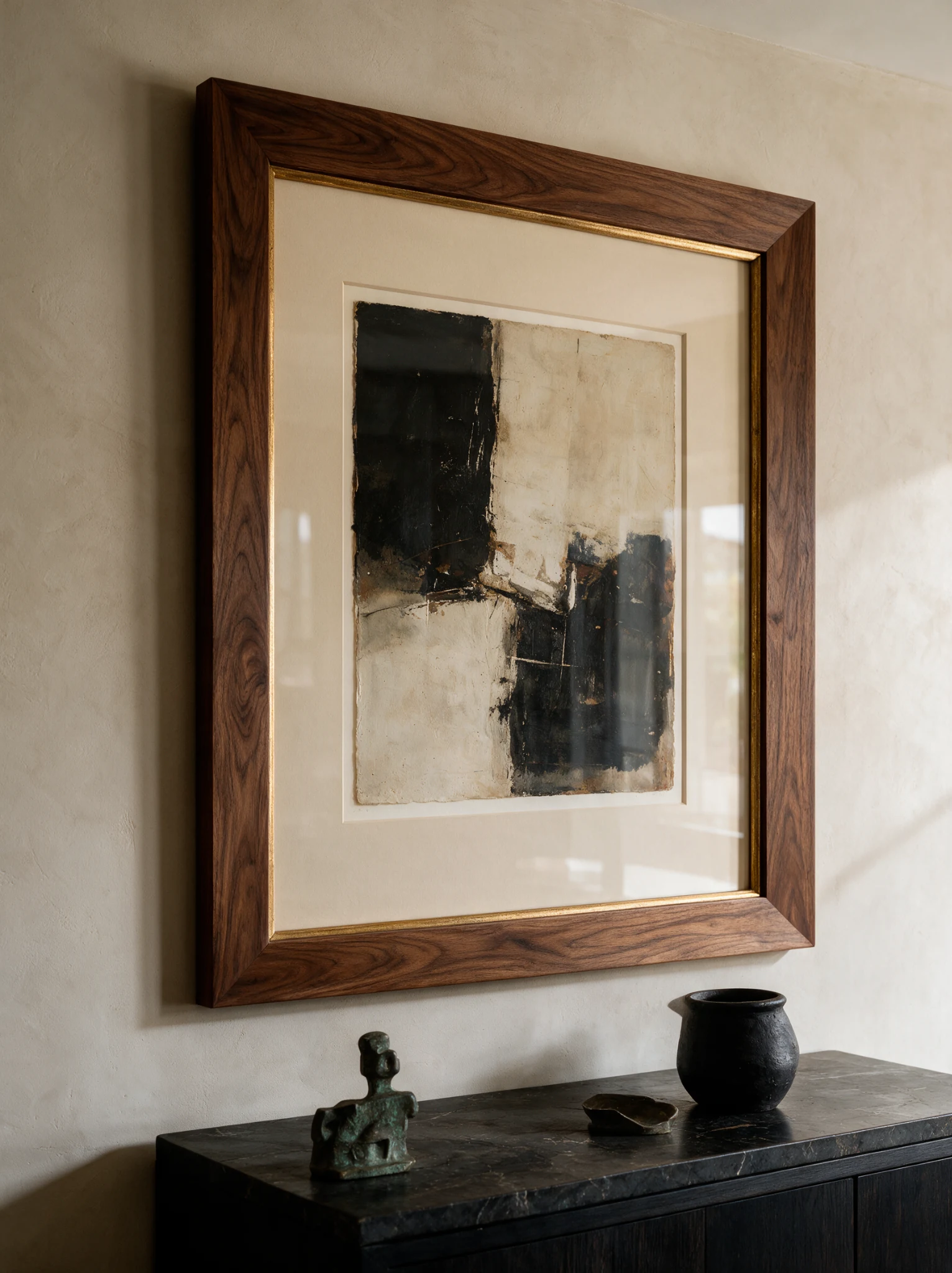
Glazing is part of the design, even when you barely notice it.
Reflection, clarity, UV protection, weight, size, and display conditions all affect which glazing is appropriate. There is no single answer for every piece.
The best choice balances how the artwork needs to be protected with how you want to experience it in the room.
Part of conservation framing
Glazing works with the rest of the package.
Matting, mounting, backing, spacing, enclosure, and display conditions all matter. Protective glazing is strongest when it is considered as one part of the complete framing system.
Conservation FramingGlazing Questions
Choose glazing around the piece and the room.
Bring the artwork in and compare options at full scale. Reflection and clarity are easier to judge in person.
01What does museum quality glazing mean?
It refers to premium glazing selected to improve viewing and support preservation goals. The right option depends on the artwork, room, reflection, light exposure, and framing design.
02Is protective glazing only for expensive artwork?
No. Original art, photographs, documents, family pieces, and sentimental work may all benefit from a glazing choice made around preservation and viewing conditions.
03Can glazing completely prevent fading?
No glazing makes artwork immune to light. Protective glazing can be one part of a broader preservation approach that also considers display conditions and materials.
Compare in person
See the difference before you decide.
Glazing is one of the framing choices that is much easier to understand when you can see the real material beside the real piece.
Visit Masten