
Needlepoint
Stitched canvases can be presented with spacing, matting, and frame depth chosen around the thickness and edge condition of the piece.
Needlepoint & Embroidery Framing
Custom framing for needlepoint, embroidery, cross-stitch, samplers, and heirloom textiles, designed around the craft and condition of the piece.
The short answer
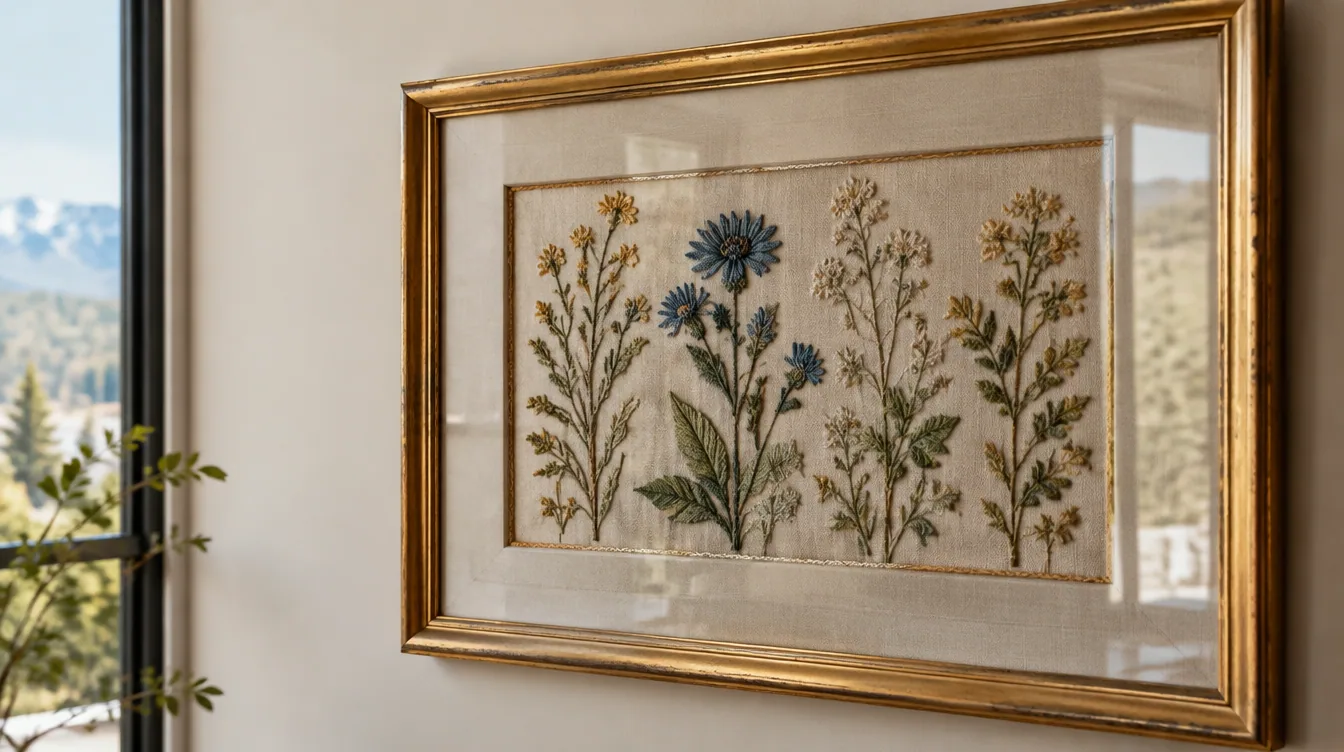
Masten frames needlepoint, embroidery, cross-stitch, samplers, and other textiles in Greenwood Village. Because stitched pieces have texture, thickness, and tension, the frame depth, spacing, support, matting, and glazing should be chosen around the specific textile.
What we can work with
Stitched canvases can be presented with spacing, matting, and frame depth chosen around the thickness and edge condition of the piece.
Hand embroidery benefits from framing that respects the texture, raised stitches, and visual character of the textile.
Traditional and contemporary stitched pieces can be framed in a way that feels current while preserving the craft.
Family textiles, decorative cloth, and hand-worked pieces can be considered for display when their condition allows.
Why custom matters
Bring the piece into the Greenwood Village studio and we can look at scale, condition, materials, depth, placement, and preservation needs together.
How it works
We look at the weave, edges, thickness, condition, orientation, and whether the piece needs visible breathing room.
Frame, matting, spacing, and background materials are selected to support the textile without flattening its character.
Older or meaningful pieces may benefit from conservation-focused materials and careful support.
The frame should support the work visually without competing with the stitching itself.
Needlepoint & Embroidery Framing Questions
Clear answers first, then we can look at the actual object and build the framing around it.
Masten Fine Framing in Greenwood Village works with needlepoint, embroidery, cross-stitch, samplers, and other textiles for clients across the Denver area.
Yes, depending on the piece. The spacing, glazing, and depth should be selected so the textile is presented safely and the texture remains visible.
Often, yes. Condition matters, so older textiles should be looked at in person before deciding on mounting, spacing, or conservation materials.
The appropriate support depends on the textile, condition, weave, and edge treatment. The goal is to present the piece evenly without creating unnecessary stress.
Absolutely. Frame profile, matting, spacing, and finish can make traditional needlework feel quiet, contemporary, or architectural.
Masten Fine Framing · Since 1986
Visit Masten in Cherry Hills Marketplace in Greenwood Village, or send a quick project brief before you come in.