Choosing the Right Materials for Preservation
Children’s artwork often includes materials such as crayons, markers, watercolor paints, collage elements, and textured papers, which can be delicate or prone to fading. To preserve these works, it’s essential to select archival-quality, acid-free mats and backing boards. These materials prevent yellowing and degradation by keeping harmful acids from touching the artwork. When consulting at Masten Fine Framing, ask specifically about museum-grade options, which offer the highest level of protection without compromising appearance.
Another critical element is UV-protective glazing. Standard glass can allow harmful light to fade colors, especially in paper-based art. Opting for UV-filtering glass or acrylic shields the artwork from direct sunlight and artificial lighting. Acrylic can be lighter and less likely to break, but it may scratch more easily than glass, so discuss your display environment to weigh these pros and cons effectively.
Mounting Methods: Balancing Security and Art Integrity
Mounting children’s artwork securely yet gently is a tricky balance. Avoid adhesives that directly touch the artwork, as they can cause stains or damage when removed. Instead, framers at Masten typically recommend hinging the artwork with acid-free archival tape or using corner pockets made from inert materials. These methods allow the paper to expand and contract naturally with humidity changes without stress or warping.
If the artwork is on heavier stock or includes 3D elements like glued-on objects, consider custom shadow box framing. This style keeps the artwork away from the glass and creates visual depth. When you bring your piece in, ask about the depth of the frame and how the artwork will be supported internally, especially for mixed-media projects that weigh more or have varying thicknesses.
Design Choices: Enhancing the Artwork Without Overpowering It
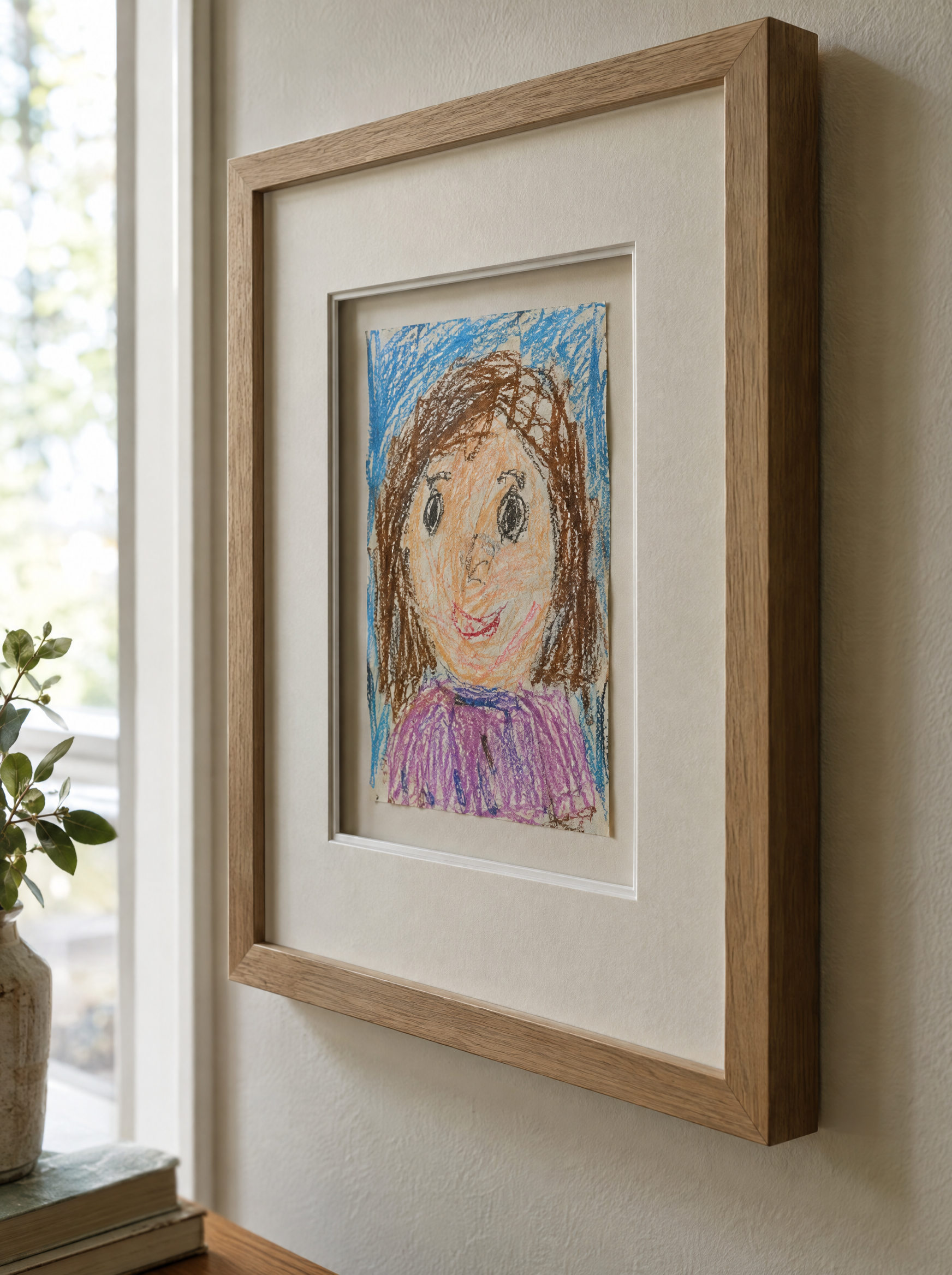
A common mistake when framing children’s artwork is using mats or frames that compete with the colors and style of the piece. Choose mats in neutral tones like white, cream, or soft gray to highlight the artwork without distraction. Colored mats can work if they pick up subtle hues within the artwork, but keep the colors muted to maintain balance.
Consider frame styles that are simple and classic rather than ornate. Thin wood or metal frames provide a clean, modern look and won’t overwhelm the youthful energy of the work. At Masten Fine Framing, specialists can help you visualize frame samples alongside your artwork, so you can see exactly how various profiles and finishes interact with the piece before committing.
What to Bring to Your Framing Consultation
Bring the original artwork and any display ideas you have, such as where the piece will hang and the light conditions of that space. Photographs of the intended wall or room can help framers understand lighting and color surroundings, so they can recommend appropriate UV protection and mat/frame colors.
If you have preferences regarding frame style or glazing (glass vs. acrylic), mention those upfront. Also, communicate your goals—whether primarily preserving the piece long term or creating a fun display to rotate regularly. This conversation allows the expert framing team at Masten Fine Framing in Greenwood Village to customize a solution tailored to your needs and budget.
Common Framing Mistakes to Avoid
One frequent error is using convenience framing kits or non-archival materials that can cause irreversible damage over time. These materials may appear fine initially but often lead to yellowing mats, fading inks, or stained artwork. Professional framers at Masten use tested conservation-grade products to avoid these issues.
Another misstep is not allowing enough space between the artwork and glazing. Without a proper mat or spacer, artwork can stick to the glass, especially if humidity rises. This contact can cause smudging, paint lifting, or adherence that ruins delicate surfaces.
Lastly, overlooking the importance of UV protection is a classic mistake. Kids’ art is often displayed in family spaces with light exposure, so failing to include UV-filtering glazing accelerates fading and color degradation. Always confirm that your framer includes this crucial element in your custom project.
Evaluating Options and Making Final Decisions
When choosing a framing solution, compare options based on archival quality, glazing type, frame style, and mounting techniques. Ask whether components are reversible, meaning the artwork can be removed in the future without damage—a feature valued in preservation framing.
Discuss cost tradeoffs early. Archival materials and UV protective glazing add expense, but they represent an investment in longevity. Simpler framing may appeal for temporary display or less precious pieces but won’t provide the same protection. Masten Fine Framing professionals can lay out these factors transparently so you decide confidently.
Ultimately, a custom framing consultation in Greenwood Village helps balance your priorities, whether that’s preserving grandparent-worthy keepsakes or creating a dynamic seasonal gallery of your child’s creativity.