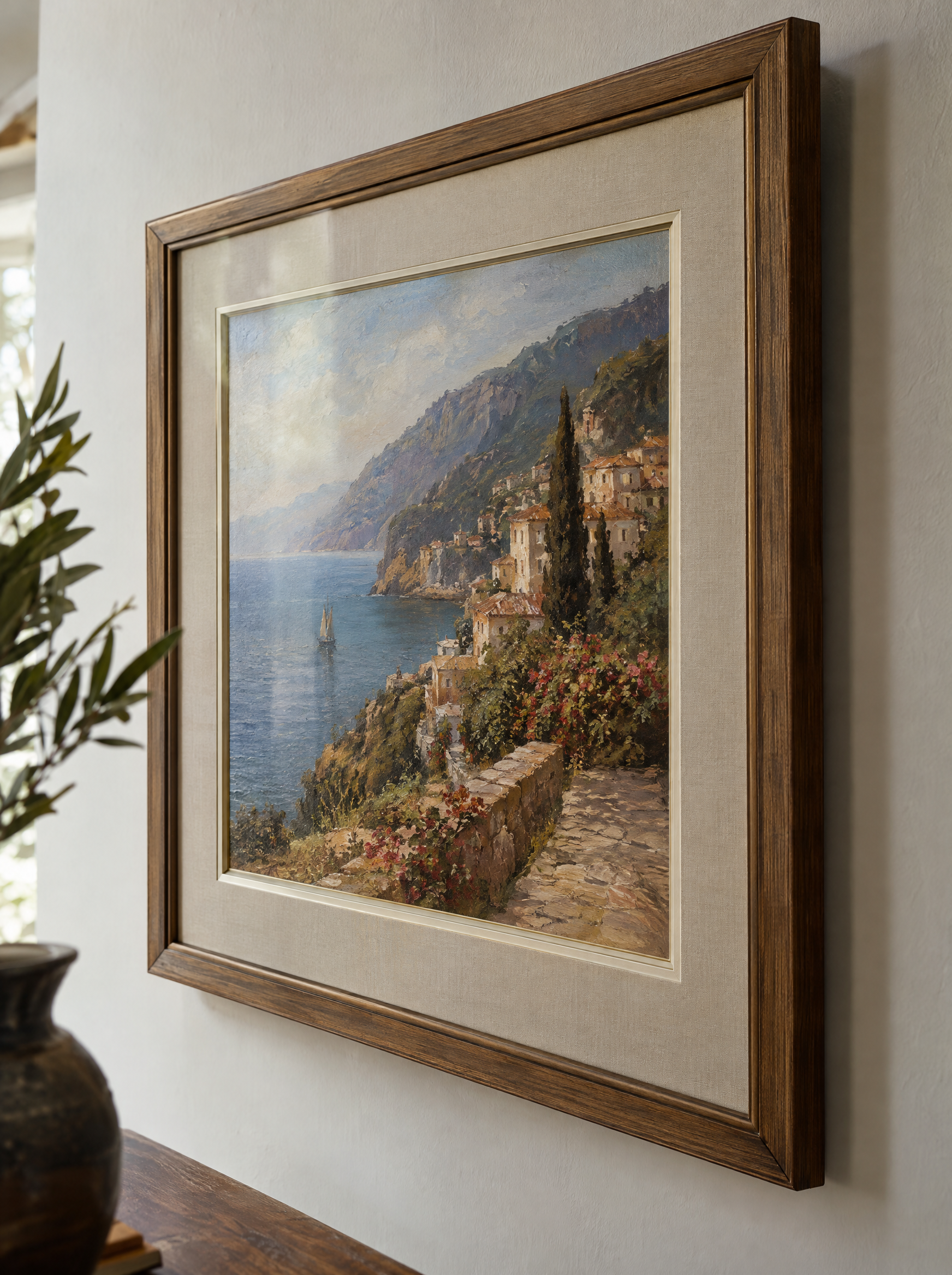
Understanding the Role of a Frame Beyond Decoration
A frame does more than just decorate your oil painting—it protects, preserves, and presents it. Unlike prints or photographs, oil paintings have textured surfaces, often with thick paint layers or impasto that require frames accommodating their depth and fragility. The right frame can prevent physical damage and minimize environmental risks like dust or light exposure.
While aesthetic harmony is important, consider how the frame physically supports the painting. Sturdy, archival-quality materials help maintain the painting’s integrity over time. For original oil paintings, glazing is typically avoided as glass can trap moisture and alter the artwork’s appearance, but protective backing and proper sealing within the frame are key.
Frame Material Choices: Wood, Metal, and Custom Options
Wood remains the most popular and versatile framing material for oil paintings. It ranges from ornate gilded frames reflecting classical styles to minimalist modern woods like walnut or maple. Wood frames can be carved or molded to echo historic periods or contemporary aesthetics, making them adaptable to diverse artworks.
Metal frames provide a sleeker, contemporary option but can sometimes feel cold or too industrial for traditional oil paintings. They are durable and less susceptible to warping, which is a consideration in humid conditions. Custom finishes—in patina or color—help metal frames soften their presence or complement a particular palette.
When selecting frame materials, assess your painting’s weight and size, the room’s climate, and the style of the artwork. For highly textured, thick impasto paintings, wider and deeper wood frames often provide better physical support.
Matching Frame Style to the Artwork and Your Space
The frame should both enhance and harmonize with your oil painting without overpowering it. For traditional or classical works, elaborate carved or gilded frames, possibly with leafing, are historically appropriate and often expected. In contrast, modern or abstract oil paintings benefit from simpler profiles that let the art speak for itself.
Consider your interior design when selecting frame style and finish. A gilded frame might look out of place in a minimalist or industrial room, while a sleek metal frame might clash with a richly paneled or formal space. Neutral wood finishes such as natural, black, or whitewashed wood offer versatile transitional options.
Bringing photos of the display area and knowledge of existing décor to a consultation can help fine framers guide your choice to a result that resonates both with the painting and its environment.
Important Questions to Ask During Your Framing Consultation
Come prepared with specific questions to maximize the value of your consultation. Ask about the frame’s archival qualities—does the frame use acid-free mats and backing? How will it accommodate the paint thickness without resting on the surface? What kind of seal or backing protection will it have to reduce dust or insect intrusion?
Inquire also about ongoing care—will the frame need periodic maintenance? What cleaning methods are safe without risking the painting? Discuss turnaround time and the possibility of seeing frame samples or mockups alongside your painting before finalizing the selection.
These questions can determine whether the final framing solution will safeguard your investment and honor the artwork’s aesthetics for decades.
Common Framing Mistakes and How to Avoid Them
One frequent error is choosing a frame based solely on current trends without regard for the painting’s style or size, which can diminish the artwork’s impact. Avoid frames that are too ornate for simple compositions or excessively minimalist for detailed, traditional oil paintings.
Another mistake is neglecting the physical realities of the painting, such as selecting a shallow frame for a heavily textured piece that will press against the glass or frame surfaces, potentially damaging the paint. Always ensure the frame’s rabbet depth matches the painting plus any liner or spacer.
Lastly, overlooking archival components like acid-free mats, proper backing, and secure mounting can accelerate deterioration. Though less visible, these features are crucial for the long-term preservation of original oils.
Avoid these pitfalls by bringing your painting for physical inspection, consulting experienced framers like those at Masten Fine Framing in Greenwood Village, and discussing your preservation concerns openly.
Preparing for Your Visit to Masten Fine Framing
When visiting Masten Fine Framing to frame your oil painting, bring the painting itself if possible. If not, high-resolution photos including close-ups of texture and stretcher edges assist advisors. Additionally, bring images or samples of your room and lighting conditions to ensure the frame complements your space.
Share your vision for the artwork’s display—whether you prefer subtle enhancement or statement framing. Communicate any concerns about fragility, preservation, or future relocation to help the framers recommend appropriate materials and design.
Masten’s local expertise in Greenwood Village combines craftsmanship with personalized service, guiding you through tradeoffs between style, support, and preservation, turning your original oil painting into a lasting centerpiece.