Plan around the keepsake
A signed jersey, collectible ball, and treasured ticket each need a different display strategy. Begin by examining the object's material, size, condition and significance. A custom frame should support what makes the object special without hiding signatures or distinctive details. Arranging the items on a table can reveal the best composition before deciding on a moulding profile.
Think about which piece should catch the eye first. A single jersey might need generous breathing room, while a group of smaller mementos can tell a richer story through careful spacing. Restraint makes the display feel considered rather than overcrowded.
Choose suitable shadowbox depth
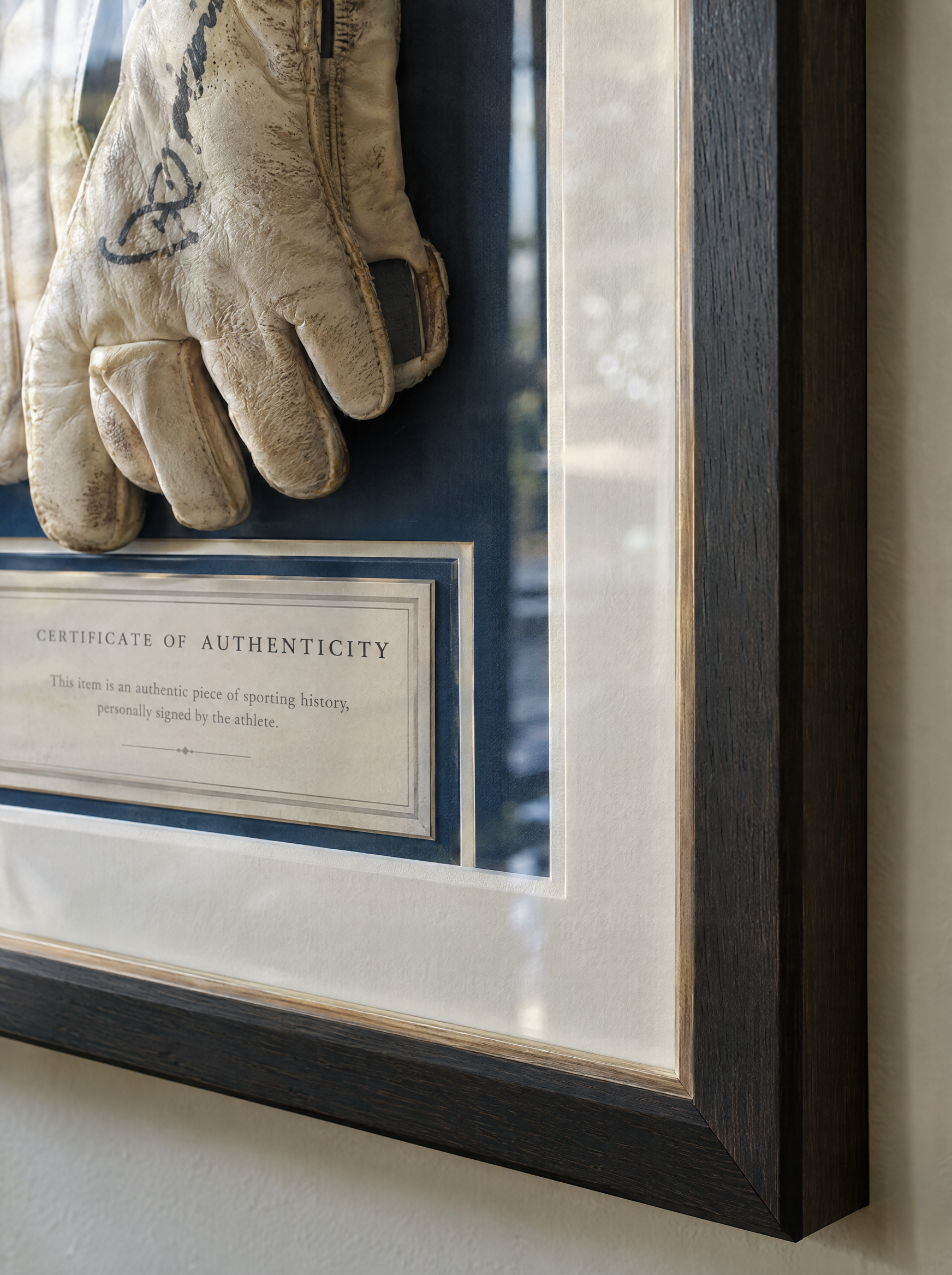
Dimensional sports collectibles frequently benefit from a shadowbox design that creates space between the memorabilia and the glazing. The required depth depends on the object's thickness, mounting method and visibility. A sophisticated presentation can still feel light and refined with a restrained moulding and well-considered proportions.
Avoid compressing fabric or allowing objects to press directly against glazing without an appropriate design. Too much empty depth can also make a small item feel isolated. Comparing sample frame corners and background materials with the actual object helps establish a confident balance.
Mount objects with care
Mounting is central to the long-term appearance and condition of framed memorabilia. Fabric, leather, paper and composite materials each behave differently, so one mounting method will not suit every collectible. Ask which support materials will touch the object and whether it can be removed later without unnecessary damage.
Ordinary tape and household adhesives are not automatically suitable, especially for signed or valuable keepsakes. Some objects may be supported using carefully designed mounts or stitching, while unusually fragile examples may need professional conservation advice. Preservation priorities should be discussed before final assembly.
Give color a supporting role
Team colors can inspire a display, but the brightest background is not always the strongest. Neutral linen-like surrounds, deep charcoal or warm white can allow a colorful jersey or photograph to remain the focal point. Assess sample matboards and fabrics against the actual memorabilia rather than relying on a screen.
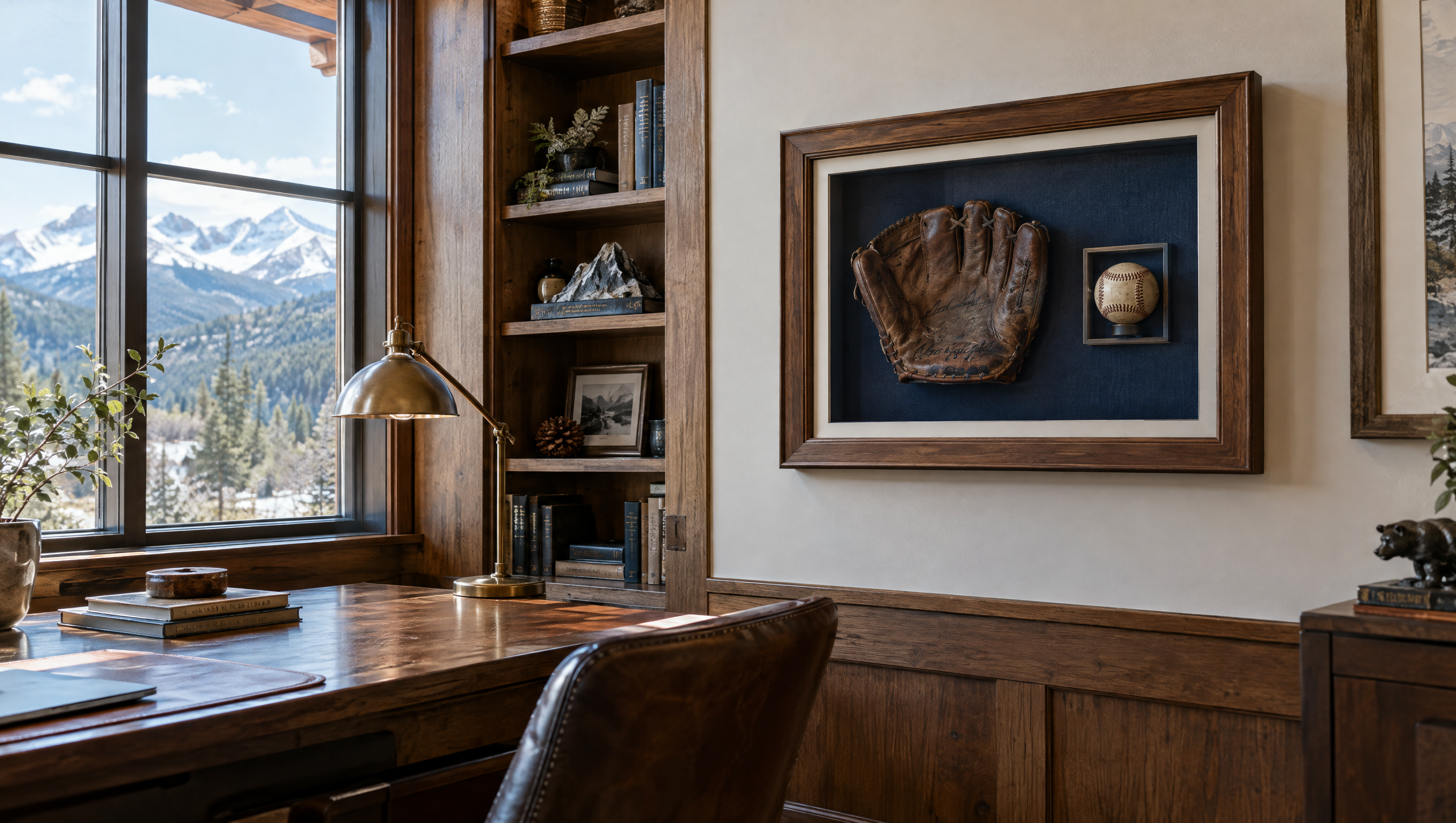
When displaying several objects together, establish a hierarchy through placement and negative space. A main item should anchor the design, while smaller tickets and photographs provide context. Avoid overly decorative borders that compete with the object and make the composition feel busy.
Plan for glazing and light
Glazing can reduce exposure to dust and handling, while appropriate options may reduce distracting reflections or ultraviolet exposure. These materials do not eliminate all sources of deterioration. The most appropriate choice depends on the object's materials and the expected display conditions, so talk through the practical tradeoffs.
Place finished frames away from prolonged direct sunlight and avoid locations with excessive humidity or dramatic temperature fluctuations when possible. Consider hanging hardware suitable for the finished frame's size and weight. A balanced display looks good from normal viewing distance and remains easy to appreciate.
Keep the story at the center
The strongest sports memorabilia displays often honor a personal memory rather than a decorating trend. A framed jersey can mark a favorite season; a ticket can recall an afternoon shared with family. The design should make those details accessible without requiring a crowded arrangement or heavy visual treatment.
Bring the actual memorabilia and related pieces to a custom-framing consultation. At Masten Fine Framing in Greenwood Village, sharing your goals, display location and preservation concerns provides a useful starting point for an individualized design. The keepsake should lead every choice from depth to finish.
Review the whole composition before framing
Before giving final approval, view the proposed frame arrangement at approximately the size it will be displayed. Check that important signatures, numbering and small details remain visible. Notice where the eye lands first and whether the background feels quiet enough to support the keepsake. These simple visual checks can make a considerable difference to how the finished piece looks on the wall.
It also helps to consider where the frame will hang and whether it will be seen from a distance or at close range. Ask about the overall weight, hanging position and ease of future maintenance. A thoughtful final review of these practical details is as important as choosing attractive colors, because the display should remain enjoyable and appropriate long after installation.