
Now booking framing consultationsStart a project
Start a Project
← Back to Journal

The Masten Journal

How to frame oversized art

At large scale, the frame is not only a design decision. It is also a structural, transport, and installation decision.

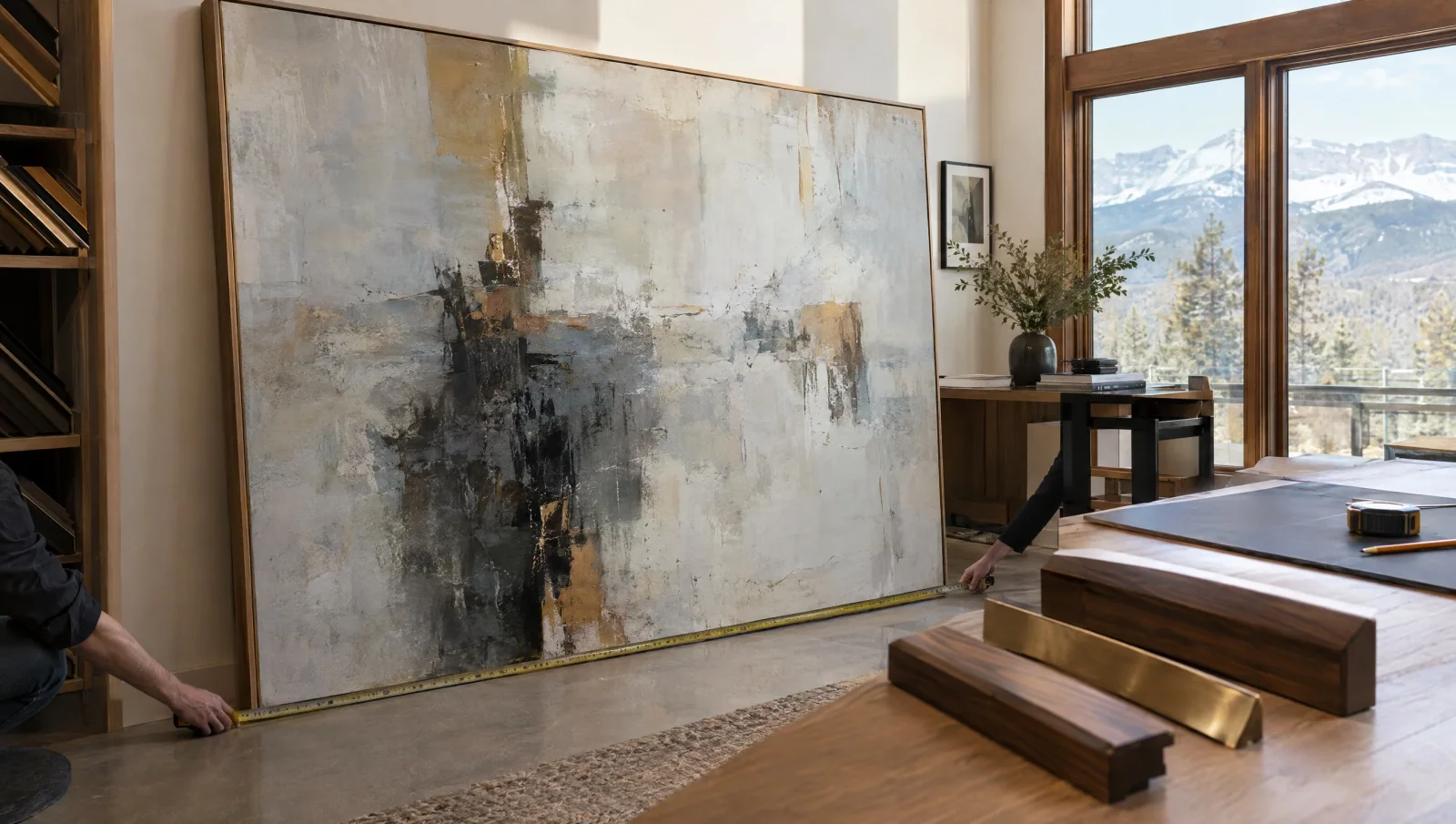
Large abstract artwork being measured during a custom framing consultation

The short answer

For oversized art, plan the frame, glazing, structural support, transport route, and installation together. Full-size proportions and the finished weight matter much more than they do on a small piece.
01

How should oversized artwork be framed?

Large artwork magnifies every framing decision. Frame width, visual weight, glazing, structural support, hanging hardware, and the relationship between the art and the wall all become more important as scale increases.

The best starting point is to evaluate the actual dimensions and medium before choosing a profile. A frame that looks substantial in the sample corner can feel surprisingly narrow around a very large piece.

02

Structure matters more at large scale.

Oversized frames carry more weight and experience more leverage at the corners and hanging points. The frame package, backing, glazing, and hardware should be planned as a system rather than as separate decorative choices.

For very large glazed works, acrylic may be considered because weight and breakage risk can become practical concerns.

03

Do not automatically choose the widest moulding.

Large art does not always need a massive frame. A restrained profile can work beautifully when the proportion is right and the artwork already has strong visual presence.

Conversely, some pieces need more frame width to feel structurally and visually balanced. Scale should be judged with full-size samples whenever possible.

04

Think about the path into the room before the frame is built.

Doorways, elevators, stair turns, ceiling height, wall width, and installation access can all affect an oversized framing project.

Measure the route, not just the wall. It is better to identify a tight turn before the frame is assembled.

05

Installation is part of the framing plan.

A heavy or oversized finished piece may require more considered hardware and wall attachment than a standard frame. The wall material and final location should be known before installation.

For designer projects or coordinated rooms, room photography, elevations, and finish samples can also help refine the frame choice.

For Interior DesignersStart a framing project

Common questions

Before you frame the piece.

Clear answers to the questions people usually ask first.

01What counts as oversized artwork?

There is no single cutoff. A piece becomes functionally oversized when its dimensions, weight, glazing, handling, transport, or installation require more planning than a standard frame.

02Should oversized art use acrylic instead of glass?

Often acrylic is worth considering because it can reduce weight and breakage risk, but the best glazing depends on the piece, size, display conditions, and viewing goals.

03Does large art need a wide frame?

Not always. Frame width should be selected in proportion to the artwork and the visual effect you want, not by size alone.

04Can Masten work with interior designers on oversized pieces?

Yes. Masten works with designers and professional clients on individual works, collections, and framing integrated into finished interiors.

05Should I measure the doorway before framing large art?

Yes. Measure the installation route, including doors, stairs, elevators, turns, and wall access, before the finished dimensions are finalized.

Oversized statement artwork framed in a refined interior

Visit the studio

Scale is easier to solve before the frame is built.

Bring dimensions, room photos, access measurements, and the artwork itself when possible so the final presentation can be designed around the full project.