How should valuable original art be framed?
Start with the artwork, not the frame wall. Medium, condition, edge, surface, scale, historic character, and where the piece will live should guide every framing decision.
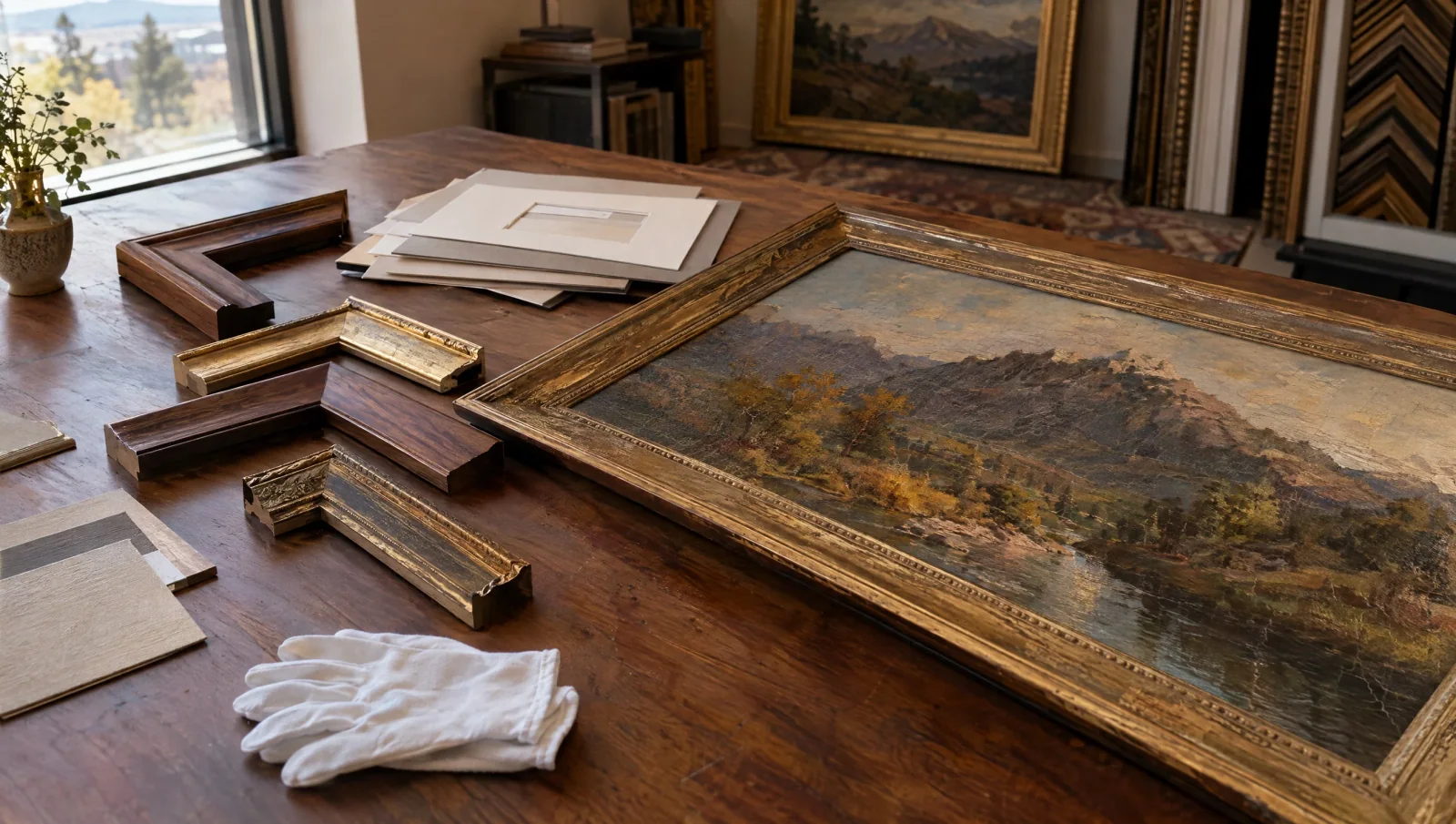
For valuable or irreplaceable work, presentation and preservation should be considered together. That can mean appropriate mounting, stable matting and backing, enough spacing around sensitive surfaces, and glazing selected for the medium and display environment.
Do not make the frame the loudest thing in the room.
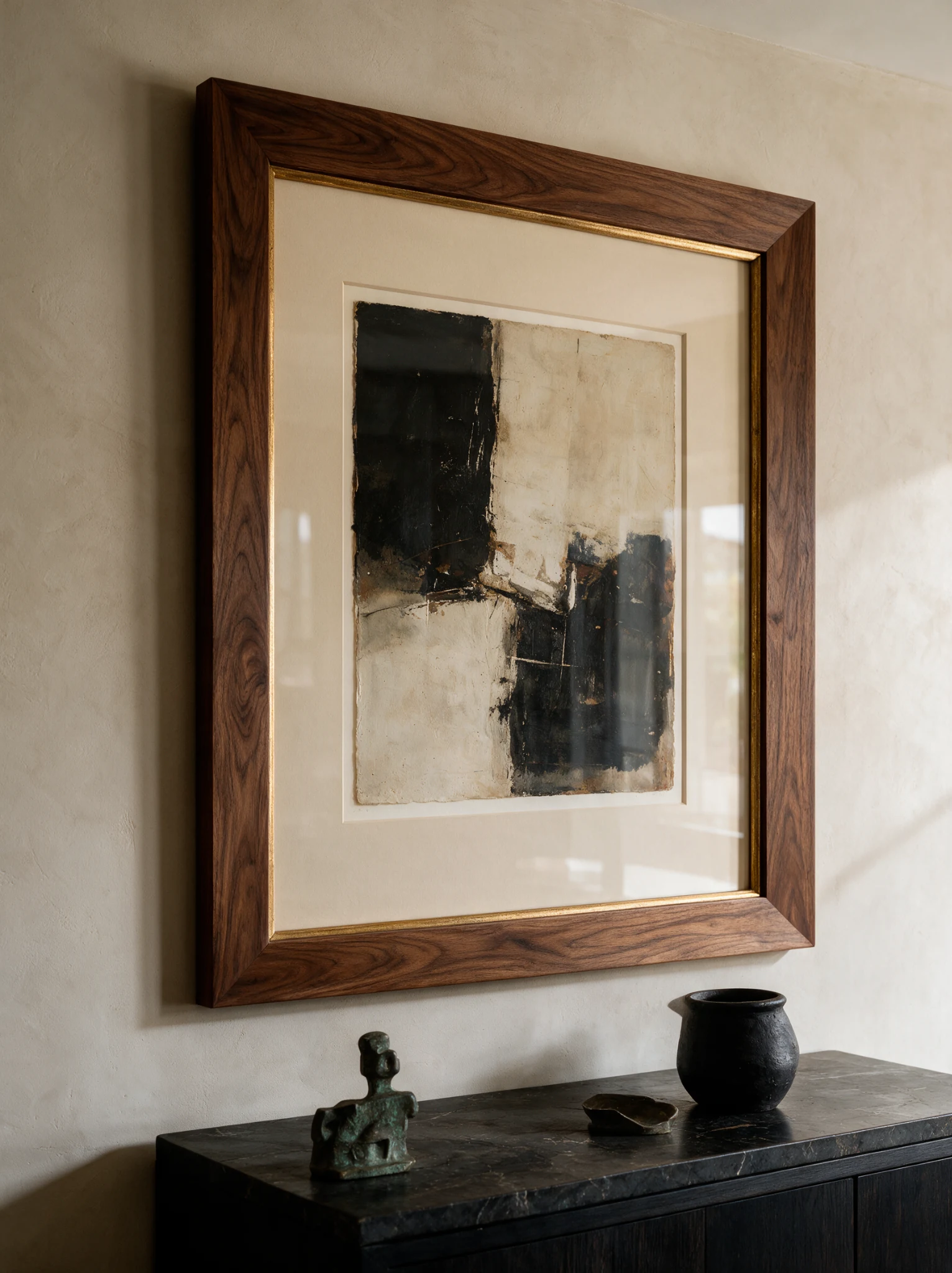
A valuable artwork does not automatically need an ornate or expensive-looking frame. Often the strongest result comes from proportion, finish, and material that support the work quietly.
Walnut, gilt, painted wood, linen liners, metal, or a very simple profile can all be right depending on the piece. The question is not which frame looks impressive by itself. It is which frame makes the artwork feel resolved.
Preservation decisions should match the medium.
A work on paper may need a different mounting and glazing strategy than an oil painting. A photograph, textile, pastel, or mixed-media piece can introduce its own sensitivities.
This is why generic framing packages are less useful for important art. The enclosure should respond to what the object actually is.
Room context matters, but the artwork comes first.
Wall color, architecture, lighting, furniture, and nearby finishes can help refine the frame choice. They should inform the decision without turning the frame into an exact match for the room.
A strong frame should still make sense if the artwork moves to another wall years from now.
Ask for a framing plan you can understand.
For an important piece, you should be able to discuss what materials are touching the artwork, what glazing is being used, how the piece is supported, and whether the framing can be reversed later.
That conversation is part of the value of custom framing.