What is the difference between museum glass and regular framing glass?
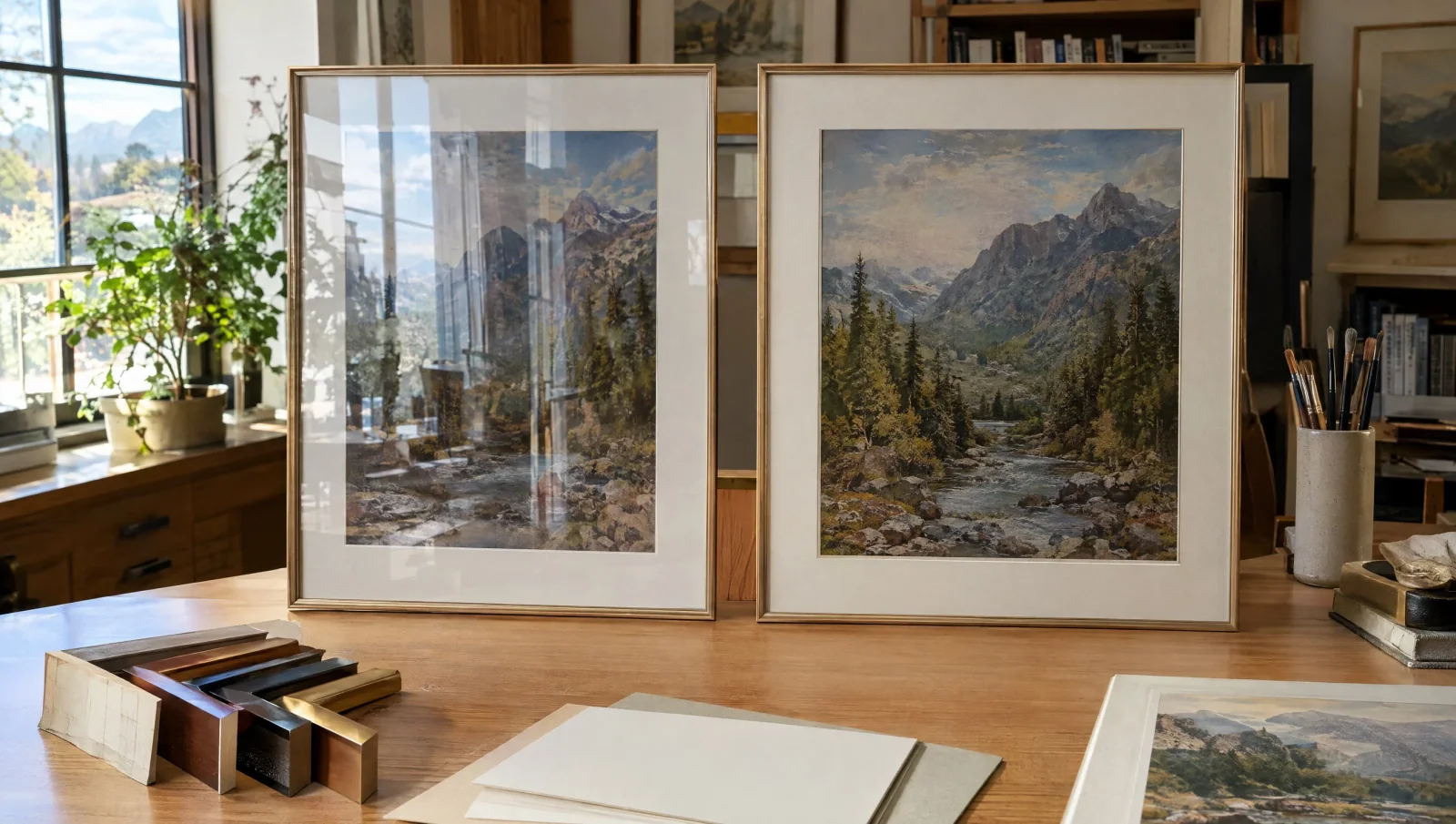
Regular framing glass creates a physical barrier between the artwork and the room. Premium museum-style glazing adds higher-performance optical and protective properties, most noticeably reduced reflections and stronger UV filtering depending on the product selected.
The biggest visual difference is often reflection control. In the right setting, low-reflection glazing can make the glass seem to disappear so the color, paper surface, and detail are easier to see.
When is premium glazing worth it?
It is most compelling when the piece is visually important, difficult to replace, displayed in a bright room, or sensitive to distracting reflections. Original art, works on paper, photographs, signed pieces, detailed prints, and small dark images can all benefit from clearer viewing.
For very large pieces, weight, safety, and handling may also influence whether glass or acrylic is the better material.
UV filtering helps, but placement still matters.
UV-filtering glazing can reduce one source of light-related damage, but no glazing makes artwork immune to fading. Direct sun, heat, humidity, and overall light exposure still matter.
Good preservation is a system: glazing, mounting, matting, backing, spacing, and room placement all work together.
The best choice depends on what you notice in the room.
If reflections are the problem, optical clarity may be the priority. If the artwork is vulnerable, preservation may lead the decision. If the piece is oversized, weight and handling become more important.
Seeing the glazing options over the actual artwork is the fastest way to understand the difference.