Begin with the fabric, not the frame.
Needlepoint, counted cross-stitch, embroidered samplers, and other stitched textiles are not simply pictures on a flat surface. Their woven grounds, raised threads, edge finishes, and past repairs all affect how they can be displayed.
Before choosing a frame, examine whether the textile is sound, evenly supported, and suitable for display. Fragile, stained, or badly distorted pieces may need advice from a qualified textile conservator before any mounting decisions are made.
Support the needlework without making it rigid.
Stitching should be supported by a method appropriate to the textile, rather than pulled tight just to make its edges look perfectly straight. For sound, lightweight flat textiles, conservation guidance describes fabric-covered supports and careful stitching through appropriate areas of the textile.
That is not a universal do-it-yourself prescription. A valuable heirloom, uneven canvas, loose threads, or previously mounted work may require a different approach. Ask how the mounting will be supported and whether it can be reversed.
Leave space between the stitching and glazing.
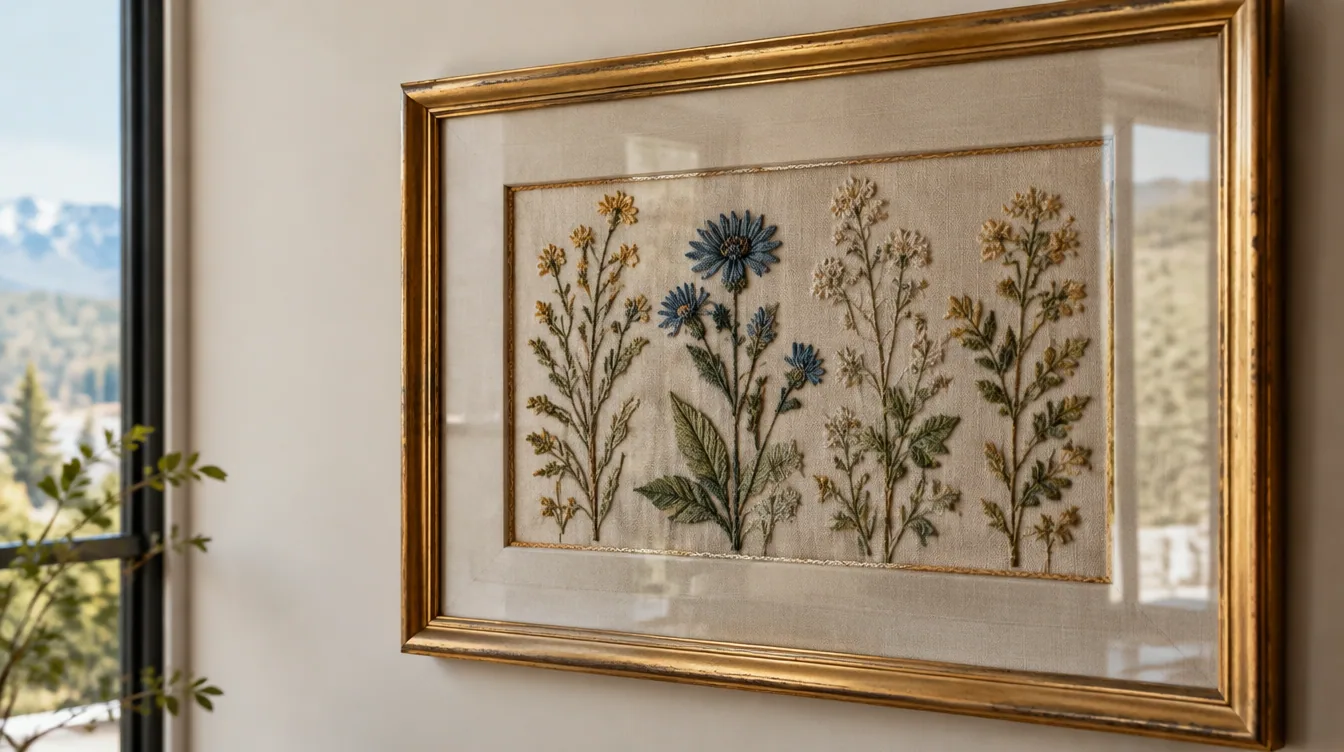
The surface of needlepoint often rises above its foundation fabric. Glass or acrylic should not be pressed onto those stitches. A deeper frame, window mat, or discreet spacer can keep the glazing safely away from the textile and preserve its dimensional character.
Spacing also gives you choices in the design: a quiet border, a visible linen ground, or a deeper shadow-box feeling. The appropriate depth depends on the highest threads, any knots or decorations, and the scale of the work.
Choose materials for the textile's life, not just today's look.
For a piece you hope to keep for decades, ask about stable backing and matting materials, the glazing's protective properties, and how the enclosure will be assembled. Avoid assuming any product makes a framed textile immune to fading or changes in humidity.
Direct sun, unnecessary handling, and damp display locations can put additional stress on fragile handwork. The best display location balances the enjoyment of the piece with practical care.
Make the framing feel personal.
A contemporary slim frame can make colorful needlepoint feel graphic and fresh, while a softer wood or restrained traditional profile can complement an inherited sampler. Neither approach is automatically better; the stitch colors, fabric ground, surrounding room, and story of the piece should lead the selection.
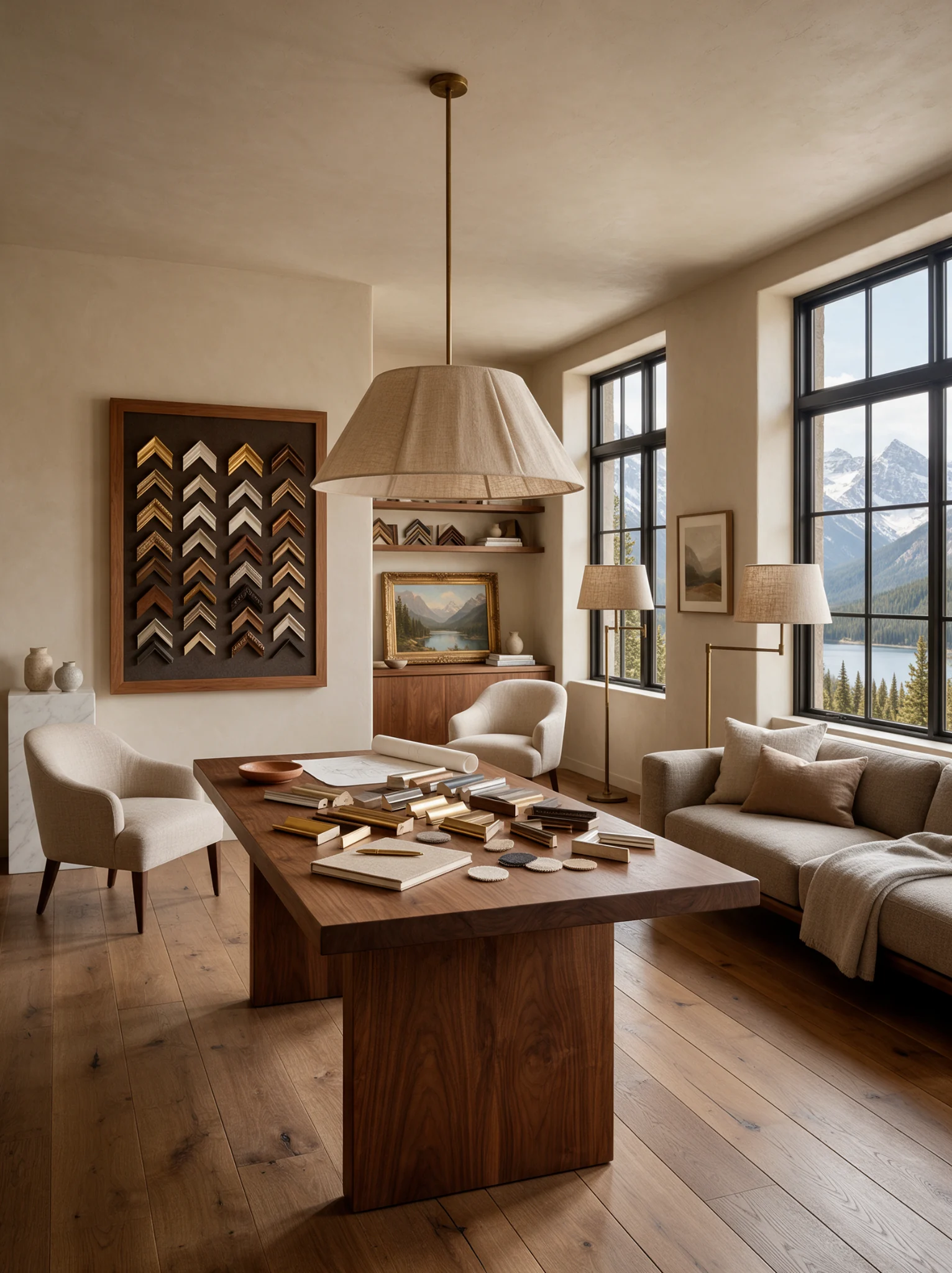
For anyone bringing needlepoint to Masten in Greenwood Village, a useful first consultation includes the actual textile, its approximate age and condition, and a few photographs of where it might hang. That allows frame samples, spacing, and preservation goals to be discussed together.