What is the best way to preserve old family photographs in a frame?
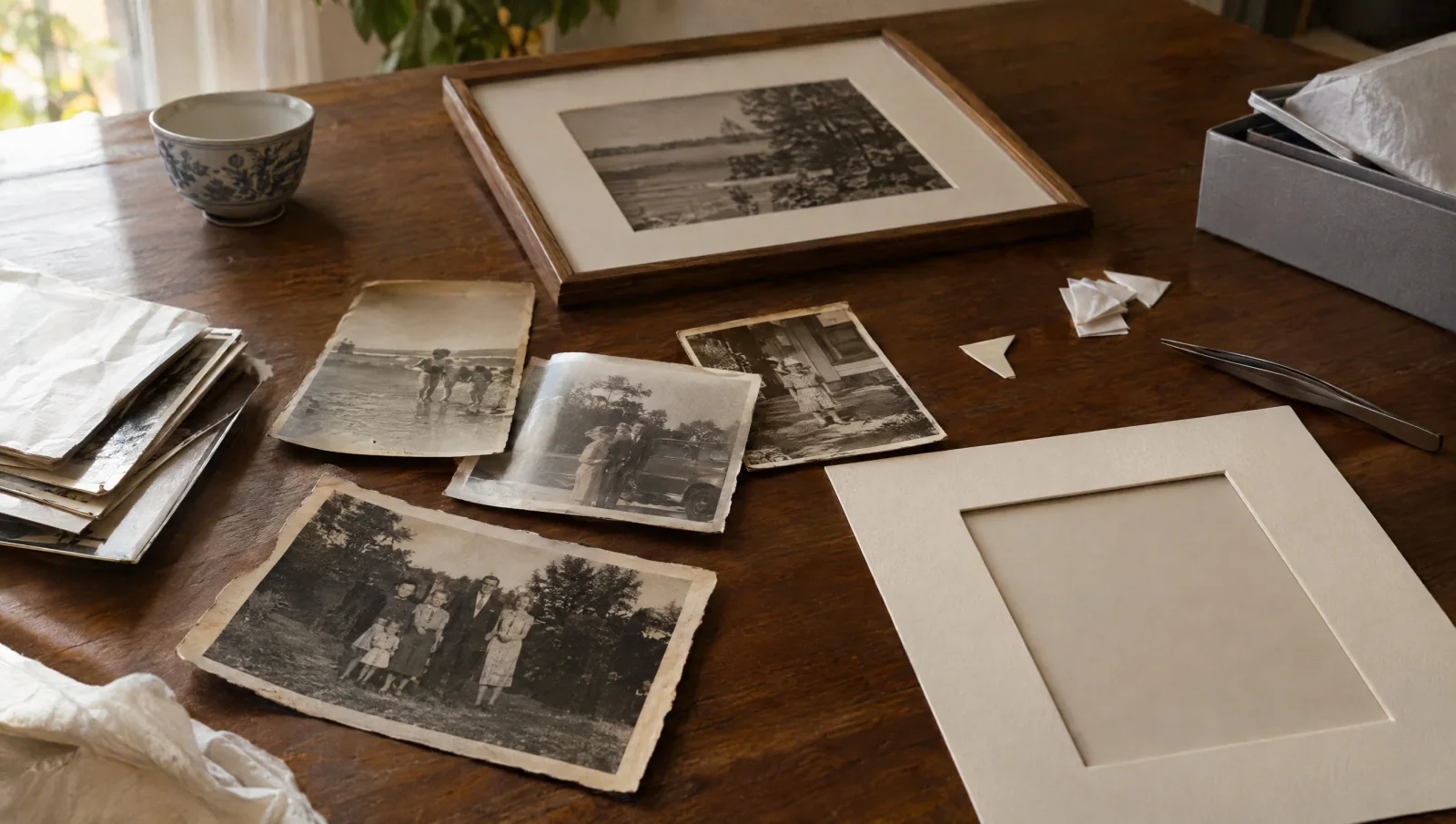
Keep the photograph physically separated from materials that may stain, stick to, or place pressure on the image. Use stable matting and backing, an appropriate mounting method, and glazing that keeps the photograph from touching the front surface.
For sentimental or irreplaceable photographs, the goal is to make the framing as reversible and gentle as practical so the original can be removed later without damage.
Do not permanently glue an irreplaceable photograph unless there is a clear reason.
Permanent adhesives can make future removal difficult or impossible. When the photograph matters as an original object, preservation-minded mounting methods are usually preferable.
Condition matters too. Brittle, curled, cracked, or previously mounted photographs may need a different approach than a modern print.
Light is only one part of preservation.
UV-filtering glazing can reduce ultraviolet exposure, but the photograph should still be kept away from direct sun, excess heat, and unstable humidity.
Where the finished frame hangs can matter as much as the glazing selected.
Consider displaying a high-quality copy when the original is fragile.
If a photograph is extremely fragile, unique, or historically important, one option is to preserve the original safely while framing a high-quality reproduction for everyday display.
That decision depends on the object and what matters most: seeing the original, protecting it, or creating a family display that can live in a brighter or more active room.
Frame the story, not just the print.
Family photographs often belong with names, dates, letters, military medals, certificates, or other small objects. Those can sometimes be brought together in a single archival-minded composition.
Bring all the related pieces to the consultation before deciding what should be included.