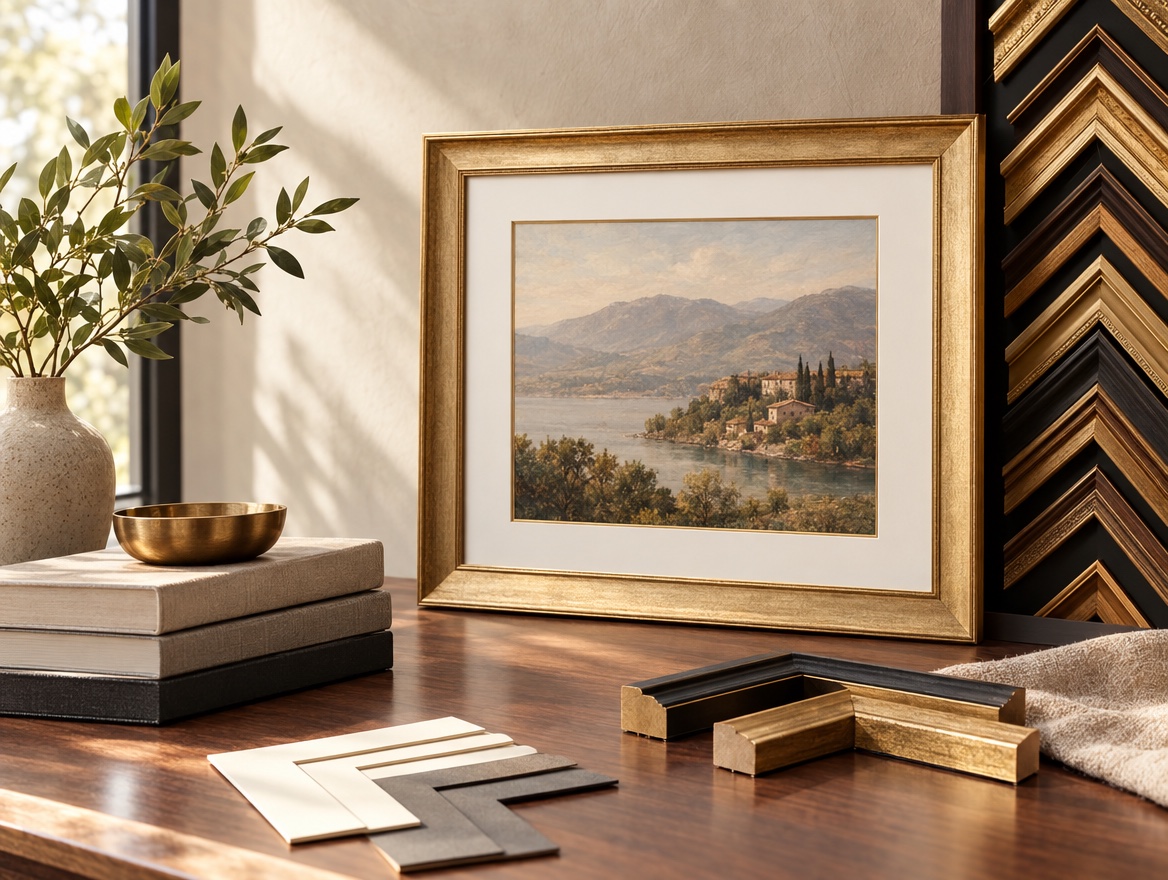
Start with what the artwork needs.
A photograph, textile, drawing, print, painting, and document can all respond differently to light, moisture, adhesives, and physical pressure. Good framing begins by understanding the object itself before choosing a moulding or mat color.
That often means separating the artwork from potentially harmful materials, allowing enough space around sensitive surfaces, and selecting mounting methods that are appropriate for the piece rather than simply convenient.
Glazing is part of the preservation system.
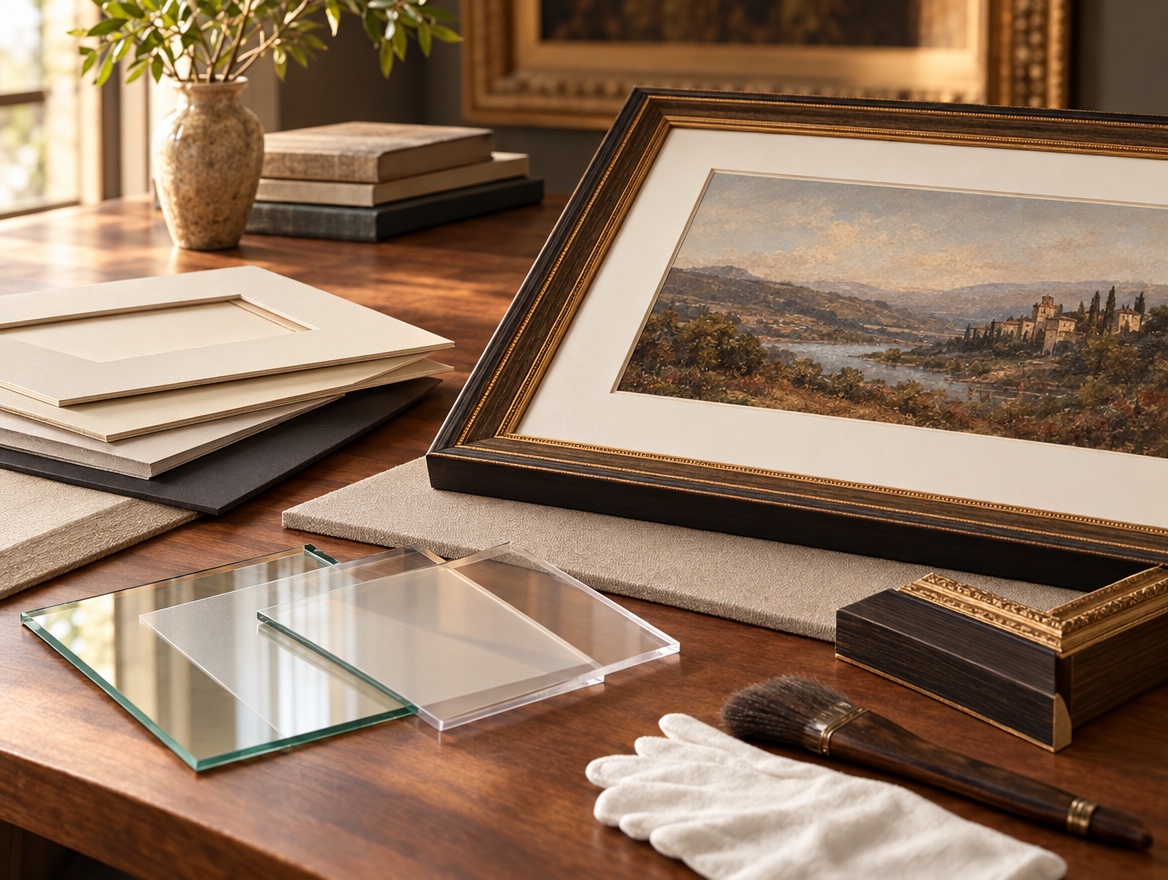
Glass and acrylic are not just transparent covers. Different glazing products can help reduce ultraviolet exposure, manage reflections, improve clarity, or provide lighter weight protection for larger pieces.
The right choice depends on where the artwork will live, what kind of surface needs to be protected, and how the piece will be viewed.
Matting creates distance as well as design.
Matting can establish visual proportion, but it can also help keep glazing from resting directly against artwork. Conservation-focused mat boards are selected for stability and compatibility with the piece, especially when the work is expected to remain framed for many years.
Reversibility matters.
Whenever possible, conservation framing favors methods that can be undone without damaging the original piece. That principle matters most with valuable, irreplaceable, historic, or sentimental work.
Future conservators, or simply future generations, should be able to remove the artwork without discovering that the frame became part of the object.
Not every piece needs the same level of intervention.
There is no single conservation package that fits everything. A replaceable poster may call for a different approach than a signed work on paper, an inherited photograph, or a one-of-a-kind textile.
The point is to make the level of protection intentional and appropriate to the actual piece.