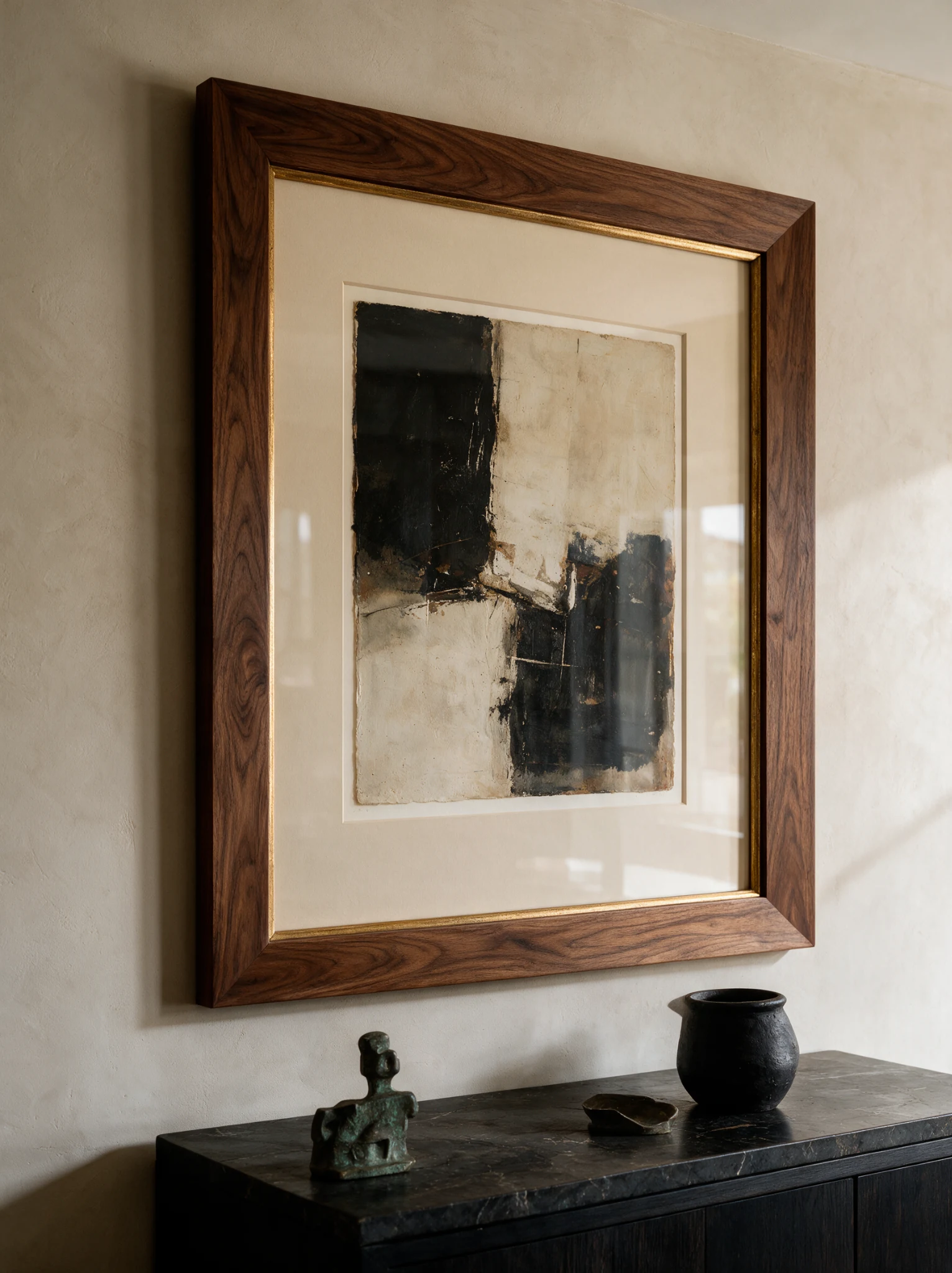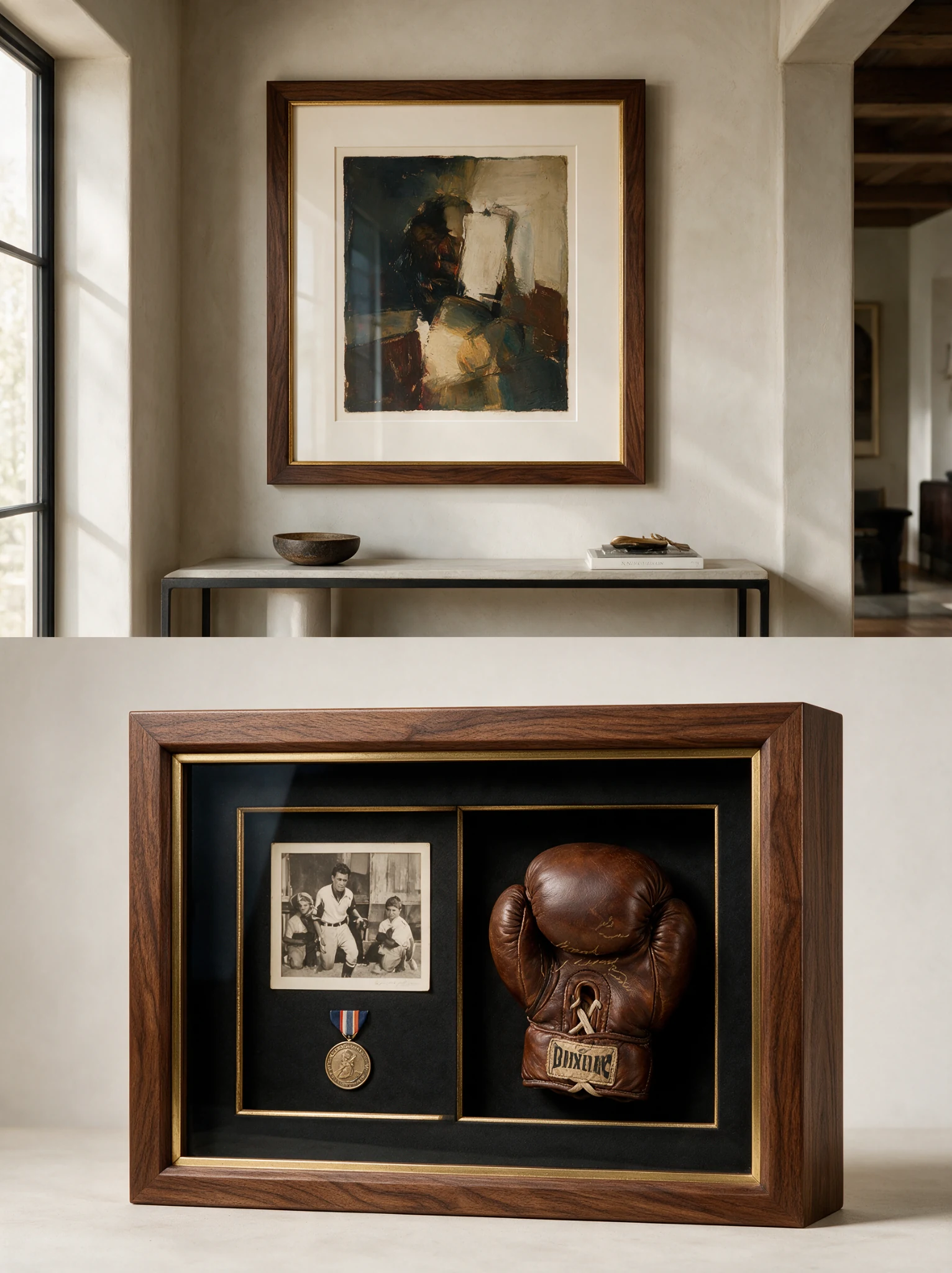
Original art and works on paper
Paintings, drawings, prints, editions, documents, and other works on paper can each require a different balance of frame profile, matting, spacing, glazing, and conservation materials.
The framing should respond to the medium and condition of the piece rather than forcing every artwork into the same construction.
Photographs
Family photographs, portraits, and fine art photography can be framed individually or considered as a group. Paper tone, image scale, mat proportion, glazing, and room context all affect the result.
Older or irreplaceable photographs may need more preservation-minded mounting and spacing than a replaceable modern print.
Posters and prints
Graphic work, collected posters, editions, and prints can range from very minimal framing to more protective presentations depending on the piece and how it will live in the room.
Memorabilia, textiles, and objects
Dimensional pieces require more than choosing a moulding. Depth, support, backing, spacing, visibility, and enclosure all become part of the design.
Jerseys, medals, signed objects, textiles, tickets, cards, and keepsakes can often be composed into a single custom presentation.
Collections and interiors
When several pieces belong together, framing can create a visual relationship across the group without making everything identical.
This is especially useful for collected walls, designer projects, and interiors with multiple works that need rhythm without repetition.